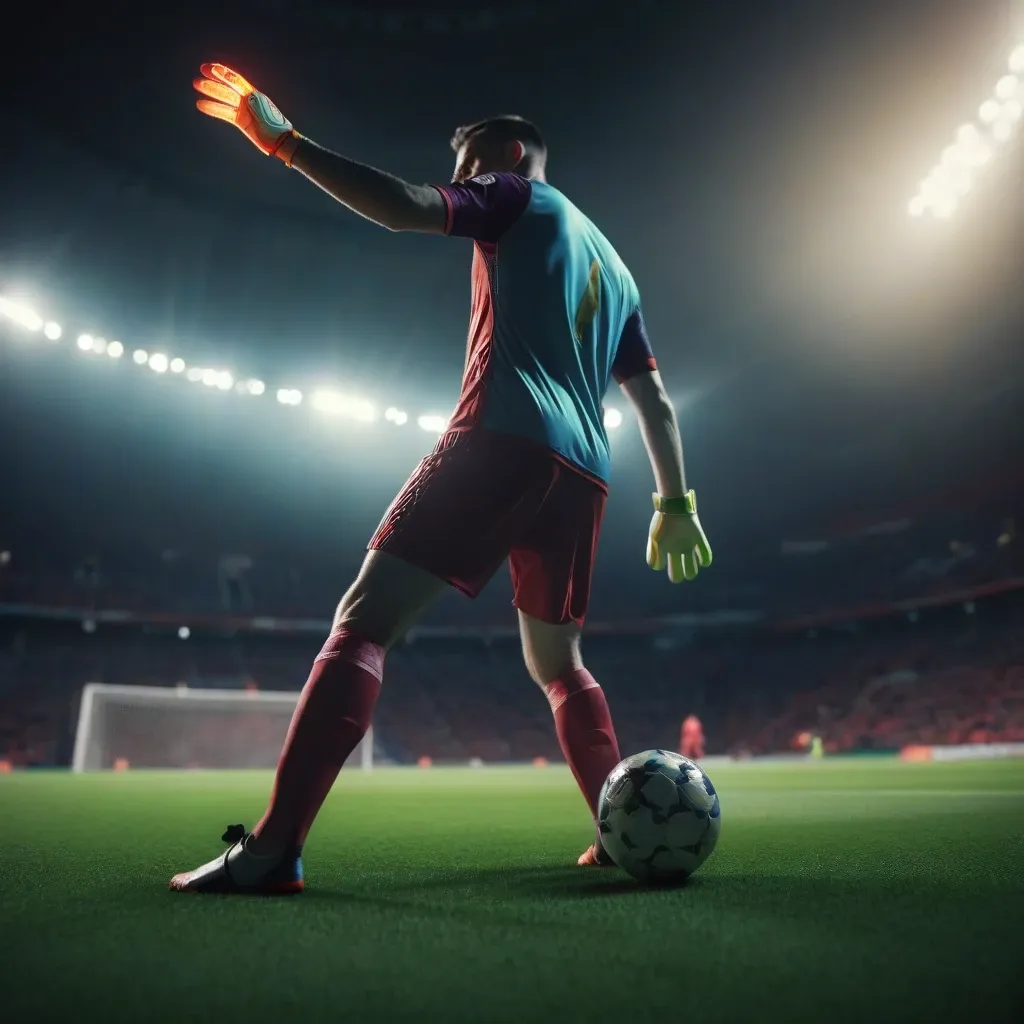
In the electrifying world of the Premier League, few moments carry the weight and intensity of a penalty kick. Imagine the scene: the stadium hushed, every gaze fixed on the lone figure standing twelve yards from goal. The hopes of a team, the dreams of supporters, and sometimes, even the trajectory of a season hang precariously in the balance. Penalties in the Premier League are more than just set pieces; they are high-pressure duels where composure and skill collide under the brightest of lights.
More than one Premier League match has been irrevocably altered by the decisive swing of a player’s boot from the penalty spot. They are the source of unparalleled drama, capable of launching careers into stardom or casting shadows of doubt. The pressure is immense, amplified by the global audience and the unforgiving nature of top-flight football where every point matters. A successful penalty can ignite celebrations, while a miss can lead to devastating consequences, turning heroes into scapegoats in an instant. The Premier League penalty spot: a stage where legends are made and broken.
Best in the Business?: Discussion about the best penalty takers in the Premier League (historically and currently)
The Premier League has witnessed countless nail-biting moments decided from the penalty spot. Some players crumble under the pressure, while others transform into ice-cold marksmen. This section explores the elite penalty takers who have graced the league, both historically and in the present day.
Throughout Premier League history, certain names stand out for their extraordinary penalty records. Players like Matt Le Tissier, known for his exceptional technique and composure, boasted an incredible conversion rate. His secret? A combination of unwavering confidence, meticulous practice, and an ability to read the goalkeeper’s movements.
Then there’s Alan Shearer, the Premier League’s all-time leading goalscorer, who possessed a ruthless efficiency from 12 yards. Shearer’s penalties were characterized by their power and accuracy, leaving goalkeepers with little chance. His success stemmed from a steely determination and an unshakeable belief in his own abilities.
Looking at the current crop of Premier League stars, several players have established themselves as penalty specialists. For instance, players who consistently deliver under pressure, maintaining impressive conversion rates. Their key to success often lies in a combination of factors, including psychological resilience, technical proficiency, and the ability to vary their approach.
Analyzing statistics, it becomes clear that the best penalty takers share common traits: unwavering focus, meticulous preparation, and the ability to block out distractions. They study goalkeepers’ tendencies, practice relentlessly, and possess the mental fortitude to perform when the stakes are highest. While some penalties may appear lucky, the success of these Premier League legends is a testament to their skill, dedication, and unwavering commitment to excellence.
The Penalty’s Value: More Than Just a Goal
In the modern Premier League, the penalty kick has become far more than just another goal-scoring opportunity; it’s a high-value play that can significantly alter match outcomes. Statistics reveal a compelling narrative about the true penalty value, underscoring its importance in securing victories and influencing league standings. The conversion rate for penalties hovers consistently high, making them one of the most reliable ways to score.
Indeed, the data speaks volumes: a sizable percentage of penalties awarded in the Premier League result in goals. This near-certainty from twelve yards makes penalties incredibly valuable. To quantify this advantage, analysts often turn to the concept of expected goals (xG). A penalty typically carries a high xG value, reflecting the high probability of scoring compared to other opportunities in open play. It’s way more difficult to score in open play than scoring a penalty. For instance, while a well-placed shot from outside the box might have a lower xG, a penalty’s xG is considerably higher, emphasizing its ‘free goal’ status.
The impact of penalties extends beyond mere statistics; they often play a decisive role in crucial moments. This season alone, numerous high-stakes matches have swung on the outcome of penalty kicks. Whether it’s securing a narrow lead, snatching a late equalizer, or breaking a deadlock in a tight contest, penalties have repeatedly proven to be game-changers. The penalty value, therefore, lies not only in its high conversion rate but also in its potential to dramatically influence the trajectory of a match and, ultimately, a team’s season.

Under Pressure: The Psychology of the Penalty Taker
Stepping up to take a penalty is a unique kind of pressure cooker. It’s not just about kicking a ball; it’s a high-stakes mental game played out in front of thousands, maybe millions, of eyes. A successful penalty isn’t solely about skill; it’s about managing the intense psychological factors swirling in your mind.
Anxiety is the first major hurdle. The weight of expectation, the fear of failure, it all contributes to a level of anxiety that can cripple even the most talented players. This anxiety directly impacts focus. When your mind races with potential outcomes, it becomes incredibly difficult to concentrate on the task at hand: striking the ball cleanly and accurately. The crowd’s roar, the keeper’s stance, the importance of the game – these distractions amplify the pressure, blurring your focus.
Confidence, or the lack thereof, is another critical component. Doubt can creep in, whispering insidious thoughts about missing the target or choosing the wrong side. This is where mental toughness comes into play. It involves cultivating the ability to block out negative thoughts, trust your preparation, and maintain a unwavering belief in your ability to succeed – even when everything feels like it’s working against you.
Over the years, I’ve learned to manage the pressure through a combination of techniques. Visualization is a powerful tool. Before a penalty, I would vividly imagine myself scoring, feeling the satisfaction of the ball hitting the back of the net. This helped build confidence and reduce anxiety. Mindfulness exercises, like focusing on my breath, helped me stay present in the moment and avoid getting overwhelmed by the surrounding chaos. These techniques are not magic bullets, but they can significantly improve your performance under pressure. Mental preparation is just as important as physical training.
Keeper’s Game: The Art of Penalty Saving
Penalty saving is a high-stakes duel of wits, a moment where the goalkeeper transforms from a defender into the last line of hope. It’s more than just luck. It’s a blend of technique, strategy, anticipation, and even a bit of psychological warfare. The best penalty savers aren’t just reactive; they’re proactive, attempting to dictate the terms of the confrontation.
One core element of successful penalty saving is meticulous preparation. This often involves studying the penalty takers. Goalkeepers analyze video footage, looking for patterns in their run-up, body language, and shot placement. Are they predominantly left-footed or right-footed? Do they favor a particular side? Do they tend to blast the ball or place it with finesse? These are the kind of questions goalkeepers explore.
Positioning is also crucial. Most goalkeepers adopt a slightly forward stance, cutting down the angle for the shooter. They remain light on their feet, ready to spring in either direction. The “diving” is another essential skill. A strong, explosive push-off is needed from the foot, combined with outstretched arms to cover as much of the goal as possible. Timing is everything; too early, and the shooter can adjust; too late, and the ball is past.
The mind games also come into play. Some goalkeepers use subtle movements or gestures to distract the penalty taker. Others might stare them down, attempting to project an aura of confidence. The goal is to introduce a seed of doubt, to disrupt their focus and increase the likelihood of a mistake. Focus is the ultimate key. Blocking out the roar of the crowd, the pressure of the moment, and zeroing in on the task at hand. It’s about being present, reactive, and prepared to launch. Penalty saving is an art, a test of skill, courage, and mental fortitude.

VAR’s Impact: A Blessing or a Curse?
The Video Assistant Referee (VAR) system arrived in the Premier League with the promise of eradicating glaring errors and ensuring fairer outcomes, particularly concerning penalty decisions. Has it lived up to the hype, or has it inadvertently sucked the soul out of the beautiful game? The reality, as with most things, is complex and multifaceted. VAR’s intervention in penalty calls has been a source of constant debate, often leaving fans, players, and managers scratching their heads in frustration.
On the one hand, VAR has undeniably corrected some clear and obvious errors. Blatant fouls missed by the on-field referee have been overturned, preventing injustices that could alter the course of a match or even a season. The data suggests an increase in penalty accuracy since its implementation, which some argue validates its existence. It’s hard to argue against tangible evidence that VAR has, at times, delivered on its initial promise.
However, the implementation hasn’t been without its significant drawbacks. One major criticism revolves around consistency. What constitutes a “clear and obvious error” seems to vary depending on the referee, the match, and even the phase of the moon, or at least that’s how it feels to many supporters. Subjective interpretations of marginal calls have led to endless replays, dissecting incidents frame by frame, only to arrive at decisions that still leave half the stadium incensed. This inconsistency breeds distrust and undermines the very fairness VAR is supposed to uphold.
Furthermore, VAR’s interference has undeniably disrupted the flow of the game. The spontaneity and excitement of a goal celebration are often muted, pending the dreaded VAR check. The delays can be agonizing, sucking the energy out of the stadium and leaving players and fans in a state of limbo. The constant stoppages can also disrupt the rhythm of the match, leading to disjointed play and frustrating viewing experiences.
Ultimately, whether VAR is a blessing or a curse remains a matter of personal opinion. While it has undoubtedly improved accuracy in some instances, the inconsistencies, delays, and subjective interpretations have led to widespread frustration and controversy. Perhaps with further refinement, clearer guidelines, and a greater emphasis on minimizing disruption, VAR can evolve into a more universally accepted tool for ensuring fairness in the Premier League. But for now, the debate rages on.
Future of Penalties: Potential Rule Changes and Innovations
The penalty shootout, a thrilling yet often controversial climax to football matches, is ripe for innovation. The current system, while dramatic, sometimes feels like a lottery rather than a true test of skill and nerve. Looking ahead, several potential rule changes could enhance fairness and reduce the element of chance.
One area ripe for change is the order of penalty takers. The current alternating system can create a disadvantage for the team shooting second, especially in sudden death. A potential innovation could involve a “best-of-three” format, with teams alternating two penalties at a time, followed by sudden death if necessary. This might provide a more balanced opportunity for each team.
Another avenue for exploration is the integration of skill-based challenges into the shootout. Imagine a scenario where, instead of a straight penalty, players must dribble through a short obstacle course before taking their shot. This would add an element of agility and ball control, making the outcome less dependent on pure luck. The use of VAR could be expanded to review not just the foul leading to the penalty, but also the goalkeeper’s positioning and movement, ensuring they adhere strictly to the penalty rules.
Ultimately, the future of penalties lies in finding a balance between maintaining the drama and excitement while ensuring a fairer and more skill-based outcome. Change is needed, and the beautiful can only benefit from a system that truly reflects the talent and dedication of the players involved.
Conclusion: Mastering the Pressure Cooker
In the electrifying arena of the Premier League, penalties stand as pivotal moments, capable of swinging match outcomes and shaping league standings. Understanding the nuances of penalty kicks extends beyond mere technique; it delves into the realms of psychology, strategy, and statistical probability. This exploration has revealed the multifaceted nature of these high-pressure situations, highlighting the importance of mental fortitude for both the penalty taker and the goalkeeper.
For players stepping up to the spot, mastering the mental game is as crucial as perfecting their strike. Visualization, breath control, and a pre-shot routine can help tame the nerves and focus on the task at hand. Similarly, goalkeepers must employ strategies to unsettle the taker, using body language and calculated movements to gain a psychological edge.
The Premier League isn’t just about brute force; it’s a chess match played at lightning speed. Analyzing opponent tendencies through careful scouting, understanding the impact of crowd noise, and adapting to the ever-evolving tactics are all part of navigating the penalty pressure cooker. Ultimately, success from the penalty spot hinges on a blend of skill, composure, and a deep understanding of the psychological battle that unfolds in those heart-stopping moments. The team that best masters these elements gains a distinct advantage in the pursuit of Premier League glory.