
The roar of the crowd, the squeak of sneakers, the agonizing seconds ticking down… then, the ball leaves his hands. Time seems to freeze. Swish! The buzzer sounds, and the arena erupts. These are the moments that define the NBA – the buzzer-beaters. More than just exciting plays, they’re potential goldmines for savvy sports bettors. The sheer unpredictability adds a layer of thrill, a chance to win big on a single, heart-stopping shot.
Everyone remembers a game that ended with a last-second shot. But beyond the adrenaline rush, there’s a strategic side to betting on these dramatic moments. This is where knowledge meets opportunity. This article is designed to arm you, the sports bettor, with the insights and strategies needed to navigate the exciting, yet challenging, world of NBA buzzer-beater betting. From understanding key player statistics to analyzing team tendencies, prepare to elevate your betting game and turn those unpredictable moments into potentially lucrative wins. Let’s dive into the thrilling realm where every second counts, and fortunes can change in the blink of an eye.
What is a Buzzer Beater?
In basketball, a buzzer beater is a shot that is released before the game clock expires and goes in the basket. The shot can either win the game, or tie the game, sending it into overtime, and is always a dramatic moment, packed with emotion and intensity.
Buzzer beaters occur when a player shoots the ball with the clock winding down to zero. If the ball leaves the player’s hand before the buzzer sounds and subsequently goes in, the basket counts. However, if the buzzer sounds before the ball leaves the player’s hand, the shot does not count.
These shots can be field goals, typically two or three-point attempts, or even free throws. Free throw buzzer-beaters are rare, but can happen when a player is fouled in the act of shooting as time expires. Buzzer beaters become incredibly memorable when they occur in playoffs or championship games.
The Thrill of Victory (and Defeat) for Players and Bettors
Buzzer beaters are the ultimate high-stakes drama in sports, a single moment capable of triggering extreme emotional responses in both players and bettors. For players, the pressure to perform in those final seconds can be immense. A successful shot brings elation, a validation of skill and countless hours of practice. Missed shots however, can lead to crushing disappointment and self-doubt, with potential long-term psychological effects.
Bettors experience a similar, if vicarious, rollercoaster. A winning buzzer-beater can deliver an unparalleled rush of excitement and financial reward. A loss, especially after believing victory was assured, triggers frustration and regret. The emotional swings tied to these unpredictable events influence future betting decisions, demonstrating the power of cognitive biases such as loss aversion in behavioral economics.
Statistical Analysis of Buzzer Beaters
Buzzer beaters are more than just lucky shots; they’re a fascinating intersection of skill, pressure, and, yes, a bit of chance. Diving into the statistics surrounding these dramatic moments reveals hidden trends and illuminates which teams and players are most likely to deliver (or be victimized by) a game-winning shot at the last second. A comprehensive data analysis shows the NBA witness around 30-40 true buzzer-beaters each season, but the success rate hovers around a mere 3%. This highlights the difficulty of these shots and underscores just how special hitting one really is.
Certain teams, due to their offensive systems, defensive tenacity, or simply their historical involvement in close games, appear more frequently in buzzer-beater scenarios. Examining team tendencies, such as their performance in the last two minutes of close games (defined as being within 5 points), unveils which franchises thrive under pressure and which falter. Some players consistently outperform expectations in these crucial moments. Their “clutch” reputation might be more than anecdotal; it can be backed up by data showing a higher field goal percentage or a greater willingness to take (and make) the tough shots when the game is on the line.
Identifying Key Performance Indicators
Beyond the simple count of buzzer-beaters made or missed, several Key Performance Indicators (KPIs) can help gauge a player’s or team’s likelihood of success in these high-pressure situations. Field goal percentage in the final minute, for instance, provides a direct measure of shooting accuracy when it matters most. However, it’s crucial to consider the difficulty of those shots. The “Clutch Performance Index” (CPI) it’s a metric calculated using the formula: CPI = (FG% in last min 0.6) + (Defensive Rating in last min 0.4). This index weights the shooting percentage of the player (FG%) in the last minute of the game by 60% and the defensive rating of the player in the last minute of the game by 40%.
Defensive metrics also play a crucial role. A team’s ability to force turnovers or secure rebounds in the closing seconds can be just as important as hitting the game-winning shot. Furthermore, understanding a player’s Usage Rate (the percentage of team plays a player is involved in while on the court) helps determine who the primary options are in crunch time. By analyzing these KPIs, fans, analysts, and even teams themselves can gain a deeper understanding of the science behind buzzer-beaters and identify those players and strategies that maximize the chances of success when the clock is winding down.
The Role of Luck vs. Skill
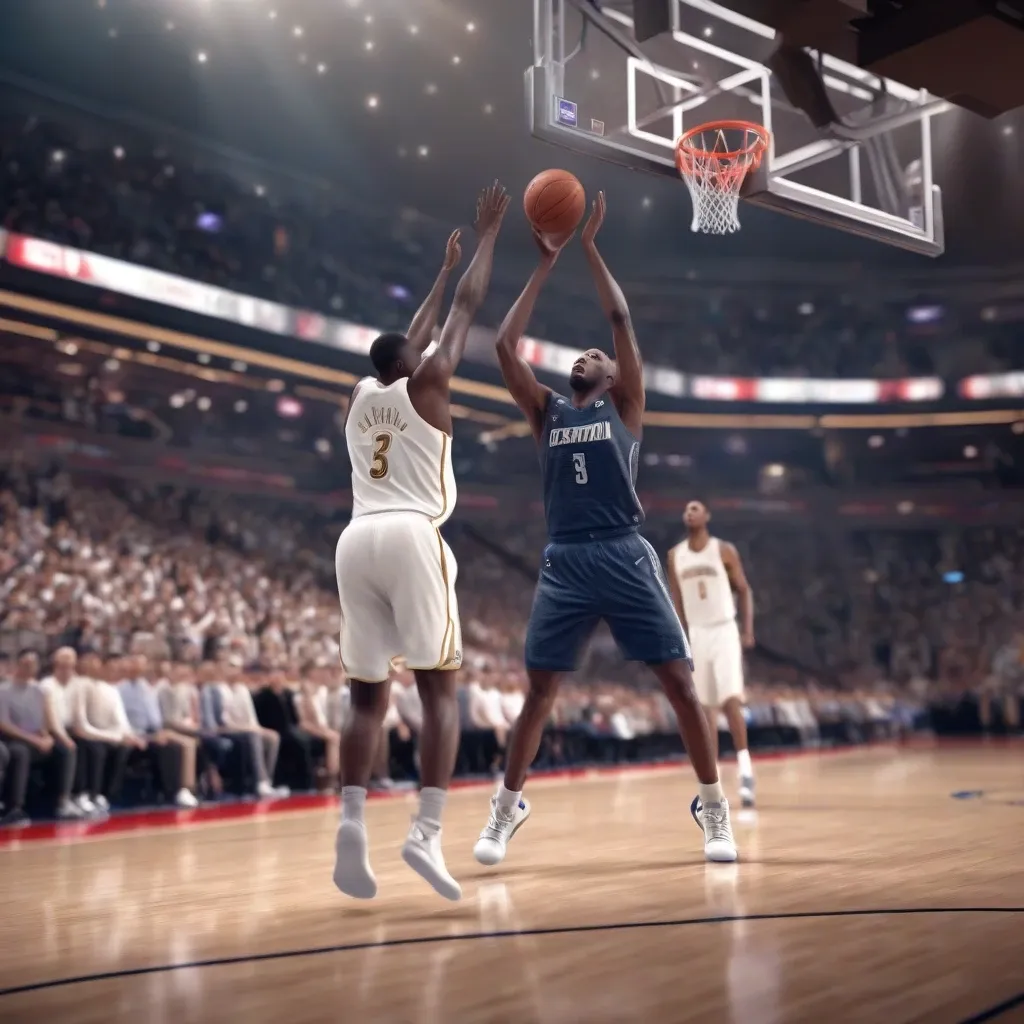
The final seconds tick down, the score is tied, and a player launches a shot from beyond the arc. Swish! Game over. Was it luck or skill? The debate surrounding buzzer beaters in the NBA often boils down to this very question.
Undeniably, luck plays a role. A favorable bounce off the rim, a defender slipping at the last moment, or even a slightly misjudged pass that somehow finds its way into the shooter’s hands – these are all elements of chance. However, to attribute all buzzer beaters to mere luck is to ignore the immense skill involved.
Shot difficulty is a major factor. Some buzzer beaters are contested, off-balance prayers, while others are relatively open looks created by intricate offensive plays. Defensive pressure also matters. A player hounded by a defender needs exceptional skill to maintain composure and execute a clean shot. Player composure, often referred to as “clutch performance,” is a skill honed through years of practice and experience, enabling players to perform under immense pressure.
While luck can certainly influence the outcome, the higher probability leans towards skill. The ability to create space, maintain focus, and execute a shot under pressure are all testaments to the countless hours dedicated to perfecting their craft. Ultimately, buzzer beaters represent a complex interplay of both luck and skill, with skill being the more significant determinant.
Betting Strategies for Buzzer Beaters
Profiting from buzzer beaters in the NBA requires more than just luck; it demands a calculated approach that factors in game context, team matchups, and even player tendencies. Forget blindly throwing money at the last second – a strategic gambler leverages knowledge and observation to identify undervalued opportunities.
Game Context is King: Before even considering a wager, deeply analyze the game situation. Is it a playoff game with heightened intensity? Are key players injured or in foul trouble? A team trailing by a significant margin in the fourth quarter might be more inclined to take risks, leading to more chaotic possessions and a higher chance of a buzzer-beater attempt. Conversely, a close game between two defensive-minded teams might see a more controlled final possession, decreasing the likelihood of a last-second shot.
Team Matchups and Player Props: Certain teams are simply more prone to close games and dramatic finishes. Teams with star players who excel in isolation situations or have a knack for hitting tough shots are prime candidates for buzzer-beater scenarios. Instead of directly betting on a buzzer-beater occurring, consider exploring player prop bets. For example, if a particular player is known for taking the last shot, a prop bet on their total points or made field goals could be a more strategic play.
Hedging Against the Spread: A sophisticated technique involves hedging your bets as the game nears its conclusion. Suppose you initially bet on a team to cover a spread, but they are now leading by a narrow margin in the final seconds. You can then place a smaller bet on the opposing team to win outright. This limits your potential loss if a buzzer-beater turns the tide and offers a guaranteed profit if your initial bet holds. This is really powerful especially when the general public feels like doing the same, creating value on the other side.
Live Betting Opportunities: The final minutes of a close game present a goldmine of live betting opportunities. Odds fluctuate rapidly based on each possession, creating situations where you can capitalize on momentary mispricings. Watch for instances where a team is forced to foul or when a player gets hot from beyond the arc. These can create the most interesting buzzer beater betting opportunities. Acting quickly and decisively during these moments is crucial.
Risk Management: Betting Smart on Buzzer Beaters
Betting on NBA buzzer-beaters can be an adrenaline-pumping experience, but it’s crucial to remember that it’s a high-variance endeavor. Risk management isn’t just a suggestion; it’s the bedrock of a sustainable betting approach. It’s easy to get caught up in the excitement, but without solid bankroll management, those thrilling wins can quickly turn into significant losses.
Effective bankroll management starts with setting clear betting limits. Determine the amount you’re comfortable losing per game and stick to it. For instance, I personally cap my buzzer-beater stakes at 1% of my total bankroll. This prevents a single bad beat from derailing my entire strategy. This is responsible betting.
Limiting losses also involves recognizing when to step away. If you’re on a losing streak, resist the urge to chase your losses with bigger bets. This is a recipe for disaster. Instead, take a break, reassess your strategy, and come back with a clear head. Emotional control is paramount.
Think of your betting activities as a long-term investment rather than a quick path to riches. Buzzer-beaters are unpredictable. There will be ups and downs. But by consistently applying risk management principles, you can navigate the volatility and increase your chances of long-term profitability. The key is to approach each bet with discipline and a clear understanding of the risks involved.
The Psychology of Betting on Buzzer Beaters
Buzzer beaters in the NBA ignite passions and create unforgettable moments, but they also present a minefield of psychological traps for sports bettors. Understanding the common behavioral biases that cloud judgment is crucial for making informed decisions, rather than impulsive wagers driven by emotion.
Recency bias, for example, leads individuals to overemphasize recent events, assuming a team’s past performance in the last few games dictates their ability to execute in a high-pressure, game-ending scenario. This can cause bettors to overestimate a team that recently hit a clutch shot or underestimate one that faltered, regardless of their overall season performance. Confirmation bias further exacerbates the issue, as bettors selectively seek out information confirming their pre-existing beliefs about a team or player, ignoring contradictory evidence.
The gambler’s fallacy, the mistaken belief that past random events influence future ones, also distorts decision-making. Some bettors might believe that a team is “due” for a buzzer-beater or that a player is “in the zone,” despite each shot being an independent event. Recognizing these cognitive traps – recency bias, confirmation bias and gambler’s fallacy, and actively working to mitigate their influence by focusing on data-driven analysis, can significantly improve betting outcomes and prevent chasing losses based on emotion. Consider, for example, a game where a player known for clutch plays misses the game-winning shot. Bettors influenced by these biases might incorrectly assume the player will continue to underperform in similar situations, ignoring their career statistics and overall skill.
Hall of Fame Players and Memorable Buzzer Beaters
The NBA’s history is paved with legendary Hall of Fame players, many defined not just by their consistent excellence, but by their extraordinary ability to perform under immense pressure. These clutch players, capable of delivering game-winning shots at the buzzer, have created some of the sport’s most iconic moments. Names like Michael Jordan, Kobe Bryant, and LeBron James are synonymous with late-game heroics. Their presence on the court in the final minutes drastically influenced not only the game’s outcome but also the betting landscape surrounding it.
Consider, for example, a game where the odds shift dramatically in the final seconds simply because LeBron James has the ball in his hands. Bettors understand that his history of clutch shots makes him a higher probability player to score or create a scoring opportunity. Similarly, a team trailing by one point with Michael Jordan possessing the ball was almost a guaranteed win, altering betting strategies in real-time. These Hall of Famers’ legacies are intertwined with these unforgettable buzzer beaters, forever linking their names to the thrill of victory and the agony of defeat – a dynamic that adds another layer of complexity and excitement to NBA betting.
Looking Ahead: Expected Future Trends
The NBA is in constant flux, and that evolution extends to the thrilling realm of buzzer beaters. Expect analytics to play an even larger role in shaping end-of-game strategies. Teams will likely refine their understanding of optimal shot selection in high-pressure situations, potentially leading to fewer contested, low-percentage heaves and more calculated plays.
Rule changes could also impact the frequency and nature of buzzer beaters. Any adjustments to foul rules, shot clock regulations, or replay review protocols will inevitably alter the dynamics of closing possessions. Furthermore, the continued rise of data-driven betting markets may influence how teams manage risk and reward in the final seconds, adding another layer of complexity to the future of these iconic moments.
Conclusion
In conclusion, successfully betting on NBA buzzer-beaters requires a multifaceted approach. Combining in-depth statistical analysis with psychological understanding and robust risk management is essential for long-term profitability. The unpredictable nature of these final-second shots demands a cool head and a calculated strategy.
Embrace the chaos, but temper it with data. Understand the players, but don’t get caught up in emotion. Manage your bankroll responsibly, and remember that even the best strategies have losing streaks. By integrating these principles, you will elevate your betting game, transforming the thrill of NBA buzzer-beaters into a potentially profitable venture. Now you possess the essential mindset, fortified by expert-backed insights, to confidently navigate the exhilarating world of betting tips.