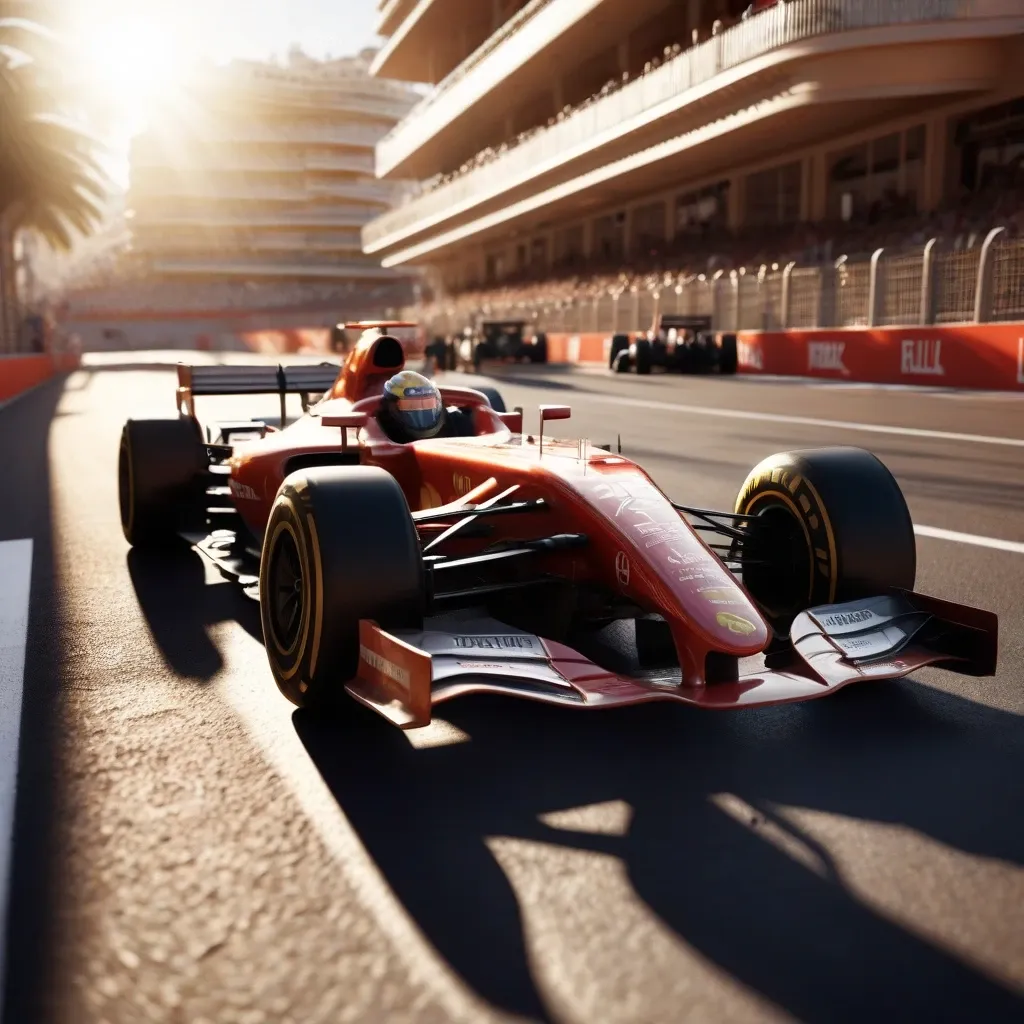
The roar of the crowd, the blinding flash of cameras, and the almost tangible tension in the air – Formula 1 qualifying is a spectacle in itself. Snagging pole position, that coveted first spot on the starting grid, feels like planting a flag on the summit before the race even begins. Yet, the history of F1 is littered with examples of pole sitters who saw their advantage evaporate before the first corner, or later in the race.
So, is securing pole position a golden ticket to the podium, or merely a fleeting moment of glory? The answer, as with most things in Formula 1, is complex. While starting at the front undeniably offers an advantage, it’s far from a guarantee of success. A myriad of factors – a sudden downpour, a daring overtake, or even a mechanical failure – can conspire to turn a seemingly sure victory into a crushing defeat. Even luck can change the outcome of who achieves to be in the top three.
The Statistical Significance of Pole Position
In Formula 1, securing pole position is more than just a Saturday afternoon triumph; it’s a powerful indicator of potential race-day success. Historical data robustly confirms that starting at the front of the grid provides a tangible statistical advantage when it comes to achieving a podium finish. Analysis of F1 seasons from 2010 to 2023 reveals a compelling correlation between qualifying performance and race results. Consistently shows that the driver starting in pole position has a significantly higher probability of not only finishing in the top three but also winning the race outright. These rates have fluctuated slightly over the years, influenced by factors such as changes in car design regulations, tire compounds, and the unique characteristics of each circuit.
Pole to Win Conversion Rate
The “pole to win” conversion rate, representing the percentage of pole sitters who ultimately win the Grand Prix, is a key metric. Historically, this rate has hovered around 30-40% across various seasons, but there’s considerable variance depending on the specific track. Tracks known for their difficulty in overtaking often see dramatically higher conversion rates, sometimes exceeding 50%. Conversely, circuits with multiple overtaking opportunities tend to reduce the pole sitter’s advantage, resulting in lower win percentages. It’s important to note that external factors such as weather and safety car interventions can also have a big impact on this conversion rate.
Pole to Podium Rate
While winning is the ultimate goal, simply securing a podium finish is a valuable result, and pole position significantly boosts those chances. The “pole to podium” rate, indicating the percentage of pole sitters who finish in the top three, is consistently higher than the “pole to win” rate. Season data suggests that a pole sitter has a 60-75% chance of making it onto the podium. As with win rates, certain circuits see higher or lower podium conversion rates depending on their layout and race characteristics. This metric highlights the substantial advantage conferred by starting at the front, even if outright victory isn’t guaranteed.
When Pole Doesn’t Pay: Crash Scenarios
Famous F1 crashes involving the polesitter
The thrill of Formula 1 includes the inherent risk of crashes, and the pole sitter isn’t immune. A prime starting position does not guarantee a clean race. History is littered with examples that underline this fact. Crashes during the first few laps, especially in tricky weather conditions, can instantaneously eliminate the pole sitter. Like when a driver misjudges the grip and ends up in the barriers or triggers a multi-car pileup further down the track. These incidents dramatically reshape the race and scramble any pre-race expectations, especially those in fantasy leagues. Sometimes, even through no fault of their own, a pole sitter can be taken out by another driver’s mistake, ending their race prematurely. These unpredictable incidents are part of what makes F1 so captivating.
Mechanical Failures of the Polesitter
Mechanical failures represents another hazard for the pole sitter. Despite meticulous preparation, unforeseen technical glitches can strike without warning. Imagine a scenario where the car sputters to a halt due to engine trouble or a sudden gearbox failure on the opening lap; this will destroy any hopes of victory. Hydraulic issues, electrical problems, or even a simple sensor malfunction can sideline the leader. This not only impacts the driver and team but also throws fantasy leagues into disarray, forcing managers to scramble for alternative points sources. The blend of high-speed racing and very complex machinery implies that even the best-prepared teams can face mechanical gremlins. It’s another reminder that in Formula 1, nothing is ever certain until the checkered flag waves.

Fantasy F1 Loophole: The “Pole Sitter Strategy”
Old Systems That Gave Points to the Polesitter
Some older fantasy F1 scoring systems inadvertently created an unbalanced playing field thanks to a qualifying bias. In these systems, a driver securing pole position was guaranteed a significant point boost, regardless of their performance in the actual race. This qualifying bias had a ripple effect on the entire fantasy league strategy.
For example, because of those unbalanced fantasy F1 system, it was possible for a driver to crash out on the first lap of the race, yet still deliver a decent fantasy score simply by having started in pole. This “pole sitter strategy” then exploited this flaw, focusing solely on predicting the qualifying results rather than the race itself. This created a loophole where a manager could gain a competitive edge by simply drafting drivers who consistently performed well in qualifying sessions. Securing high scores, even if they retired early in the race. Such systems ultimately reward qualifying pace over racecraft, thus diminishing the enjoyment of the game for many.
Data analysis from sites like stalefishlabs.com has shown the effectiveness the “always pick the pole sitter” approach. Which illustrates how skewed scoring systems impact fantasy league dynamics. It’s an interesting insight into how seemingly minor scoring tweaks lead to exploitable patterns in fantasy sports.
Fixing the Fantasy F1 Scoring System
Ideas to Make the Scoring System More Competitive
The current Fantasy F1 scoring system often suffers from a significant flaw: the pole sitter advantage. Redesigning the scoring system to minimize this advantage is essential for promoting more strategic and engaging gameplay. A truly balanced system should reward a wider range of driver skills and in-race actions, forcing players to consider factors beyond just qualifying position.
Here are concrete strategies for creating a more balanced points system:
- Reward Overtaking: Implement a system that awards points for each overtake a driver successfully executes during the race. This immediately makes drivers starting further back more attractive picks, incentivizing risk and rewarding aggressive driving skills.
- Penalize Poor Starts: Conversely, deduct points for losing positions at the start of the race. This directly addresses the pole sitter problem by penalizing drivers who fail to capitalize on their qualifying advantage. It also adds another layer of risk to picking the pole sitter.
- Adjust Weightings: Rebalance the scoring to make various aspects of the race equally important. Qualifying, race pace, and consistency should all contribute significantly to a driver’s overall score. Reduce the weighting of finishing position somewhat, and increase the weighting of fastest laps or section times.
- DNF Penalties: Introduce negative points for drivers who crash out or suffer a DNF (Did Not Finish). This adds an element of risk management, as a fast but unreliable driver could become a liability.
- Consistency Bonus: Reward drivers who consistently perform well throughout the race, even if they don’t achieve podium finishes. This could be based on maintaining a certain lap time consistency or avoiding penalties.
The beauty of modern Fantasy F1 lies in its potential for appification. The game may elegantly fix the loophole by tracking a multitude of race parameters and instantly adjusting scores based on real-time events. This keeps players engaged throughout the race and makes the game far more dynamic and unpredictable.

Beyond the Numbers: The Human Element
While statistics and data analysis offer valuable insights into the world of Formula 1, the sport’s inherent drama and excitement stem from the unpredictable human element. Pole position provides an initial advantage, yet victory is far from guaranteed. The qualities that cannot be easily quantified – driver skill, team strategy, and even the capricious nature of weather – frequently conspire to rewrite the script.
The brilliance of a driver behind the wheel can transcend the limitations of their starting grid position. Exceptional car control in wet conditions, daring overtaking maneuvers, and the ability to manage tire wear are all hallmarks of elite drivers who can carve their way through the field. Some racers just have a special knack for lights out and away. Their ability to gain multiple positions in the opening lap can dramatically alter the complexion of the race, regardless of where they qualified.
Team strategy plays an equally vital role. A well-timed pit stop, perhaps anticipating a change in weather or capitalizing on a safety car period, can catapult a driver from mid-pack into contention. These strategic masterstrokes, often made in split-seconds under immense pressure, highlight the importance of human intuition and decision-making. In the end, they exemplify F1’s beautiful blend of technology and talent, where the human factor often proves to be the ultimate differentiator.
Pole position has been vital in F1 2025 – but will the title hinge on it?
Qualifying has emerged as a critical battleground in the 2025 Formula 1 season. The ability to secure pole position offers a significant advantage, influencing race strategy and track position from the outset. As highlighted in a recent article, the driver who starts first has a considerably higher chance of converting that into a race win, impacting championship points and overall standings. With tightly contested races and minimal gaps between competitors, mastering the art of qualifying has never been more important.
Conclusion
In summary, while securing pole position in Formula 1 certainly presents a distinct advantage, it is far from a guaranteed path to victory. A multitude of factors, from tire management and strategic pit stops to unpredictable weather conditions and the relentless pressure from skilled competitors, all play crucial roles in determining the ultimate outcome of a race. The statistics reveal a nuanced reality: pole sitters win a significant portion of the time, but the percentage fluctuates depending on the track and the specific era of racing. The ever-evolving technology and regulations within F1 continuously reshape the impact of starting position on overall race success.
For dedicated F1 fans and players of fantasy leagues, understanding these dynamics is paramount. Don’t solely rely on pole position when making your predictions. Consider the drivers’ recent performance, the car’s suitability for the track, and the potential for strategic gambles. Applying these insights will enhance your appreciation of the sport and potentially give you a competitive edge in your fantasy league endeavors.